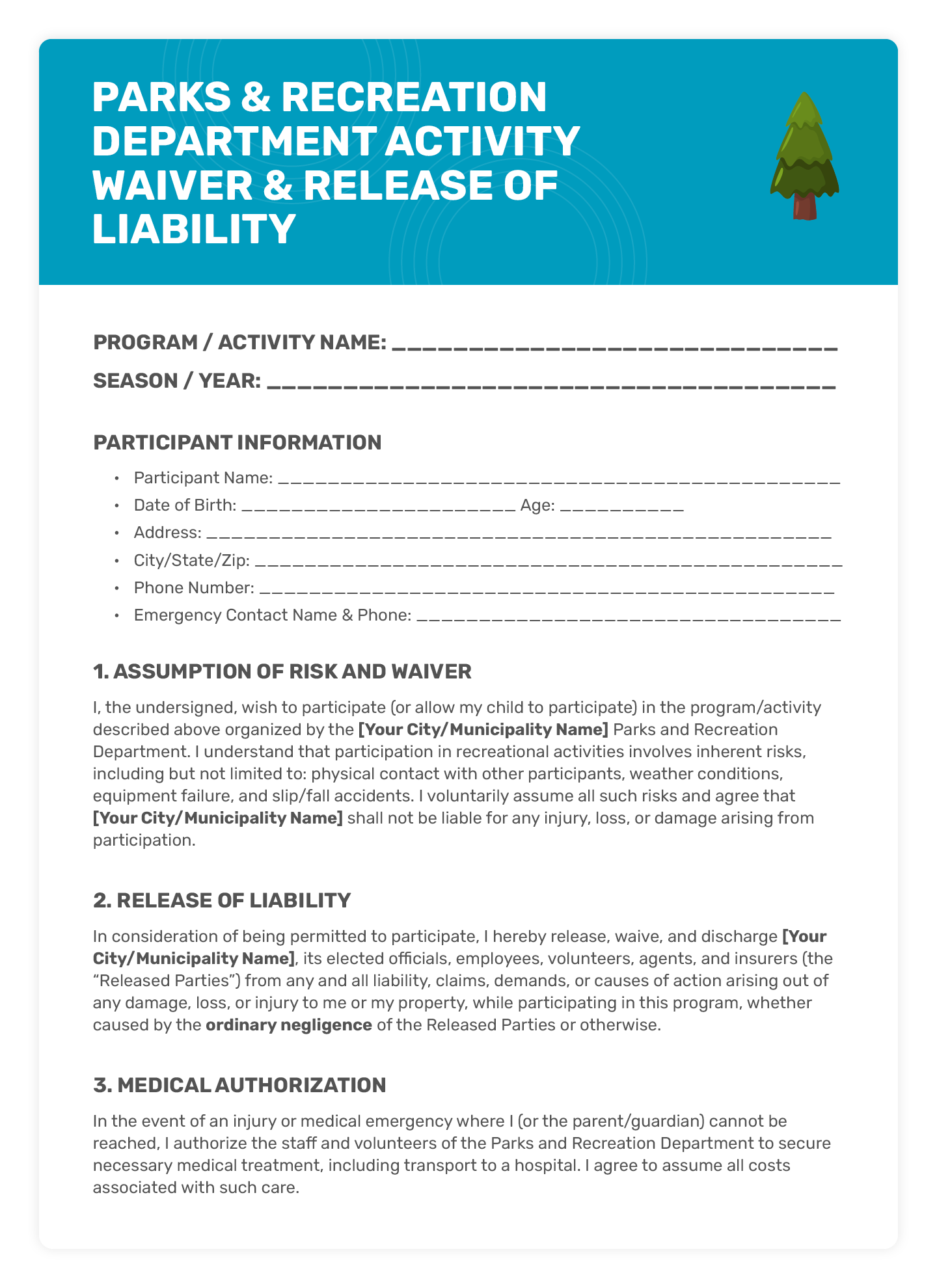
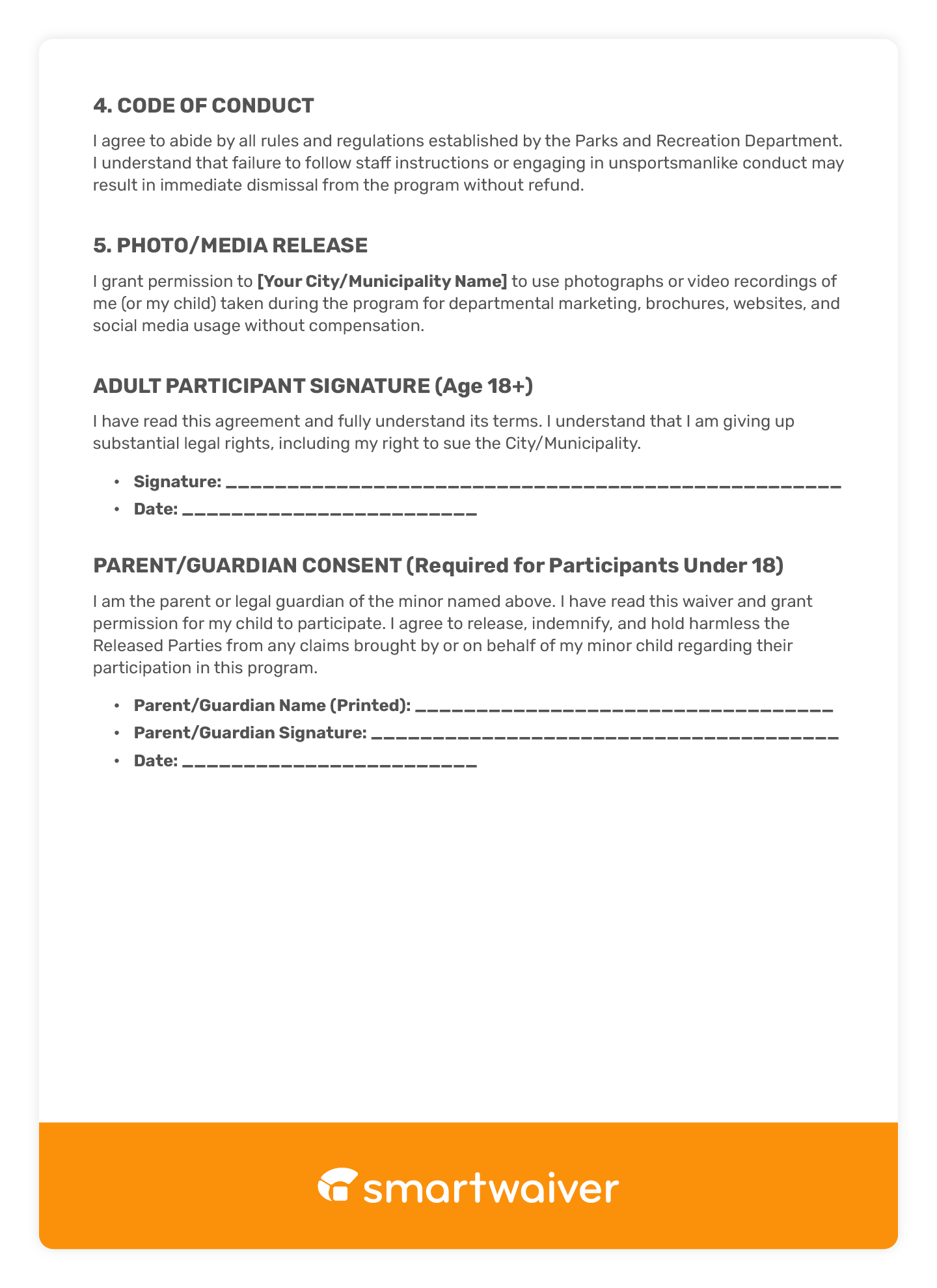
The primary reason to use waivers is for effective risk management and asset protection. Because parks and recreation departments often operate on limited budgets, avoiding costly lawsuits is critical. A waiver can protect the department, the city, and the taxpayers by having participants acknowledge the inherent risks of an activity and agree not to sue for accidents.
Waivers also serve as a communication tool. They ensure park visitors are fully aware of the physical demands and potential risks of specific programs (e.g., contact sports, wilderness excursions, etc.). Securing informed consent creates a safer environment where everyone understands their responsibilities around personal safety and conduct.