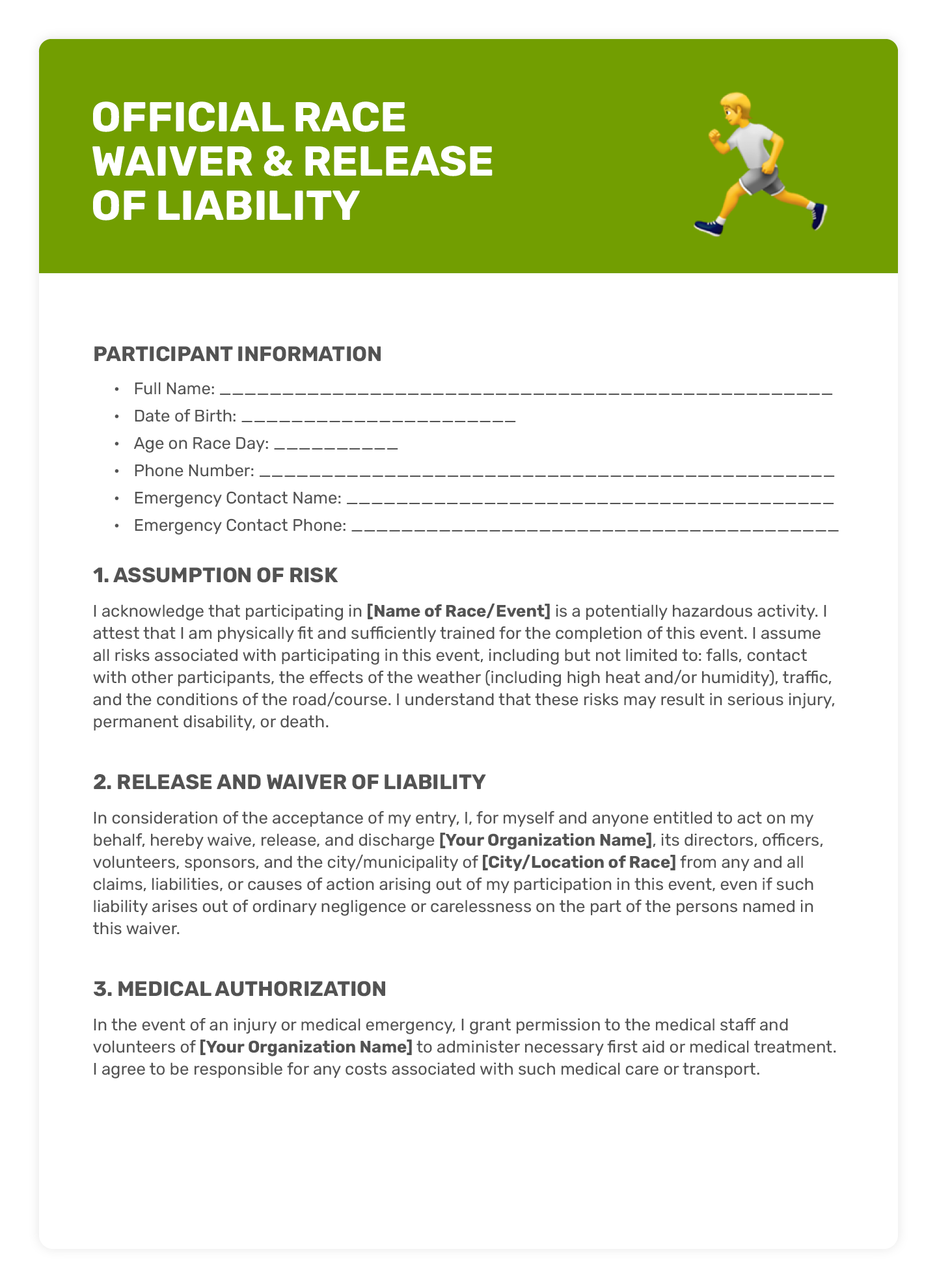
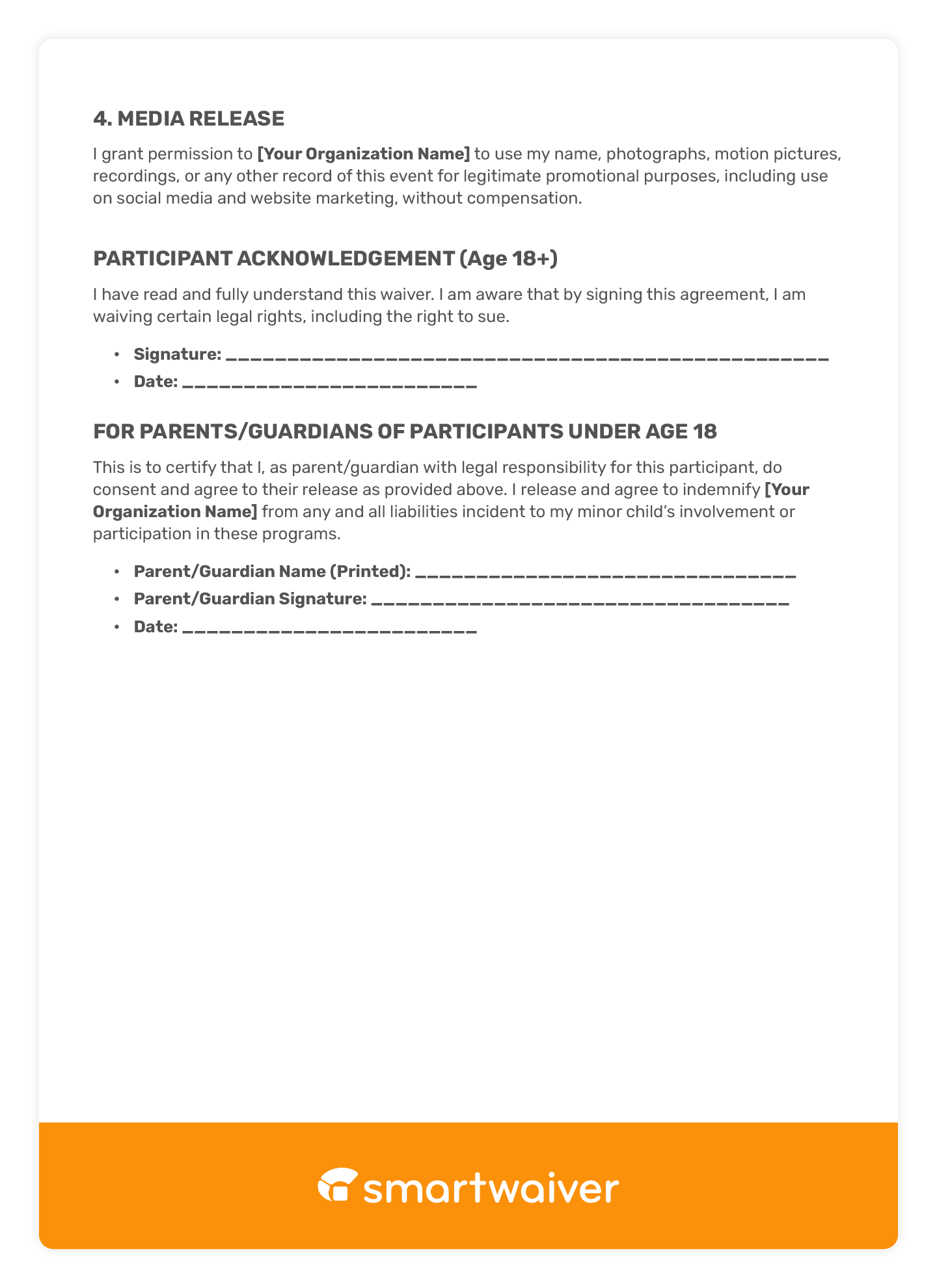
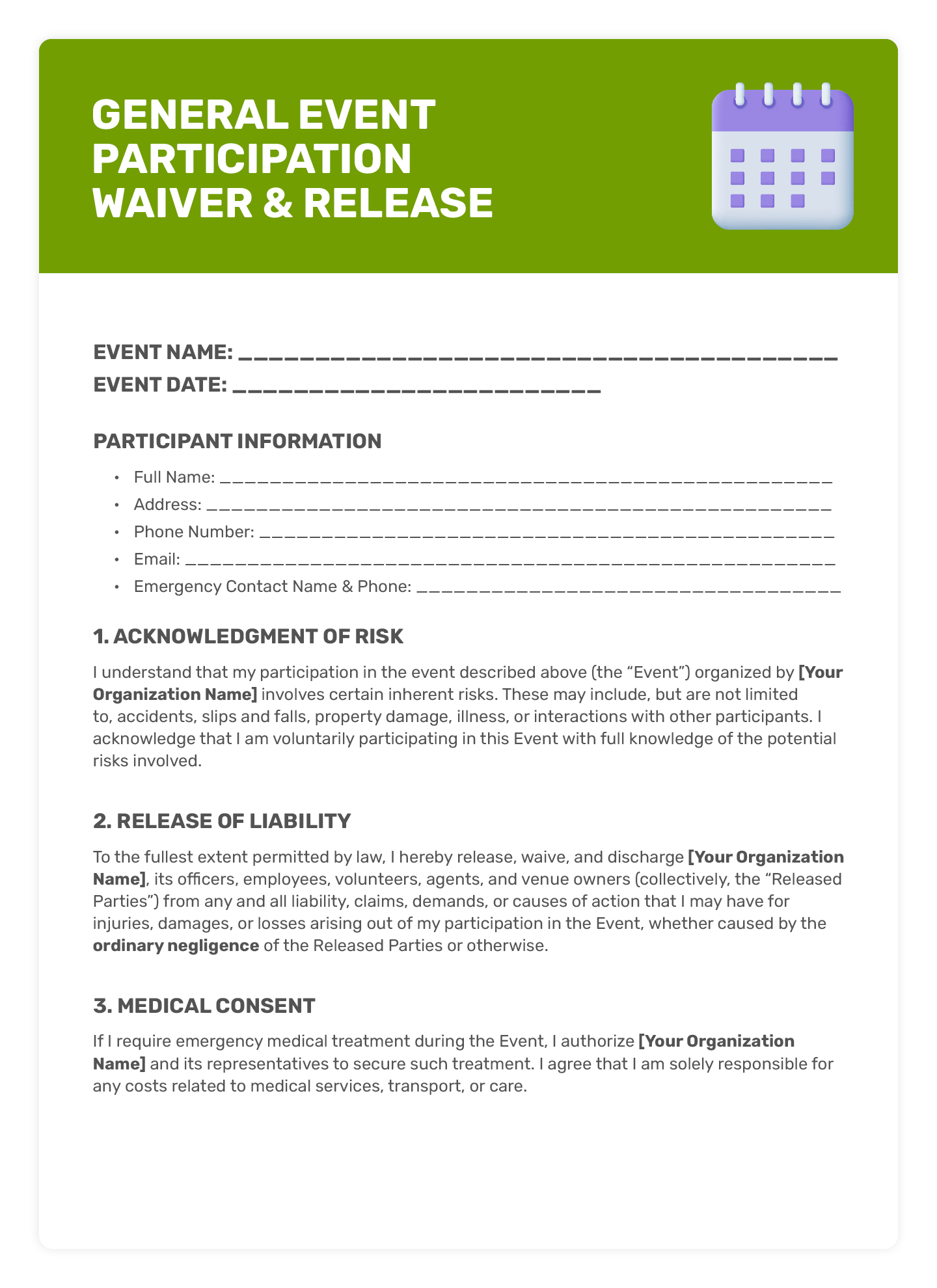
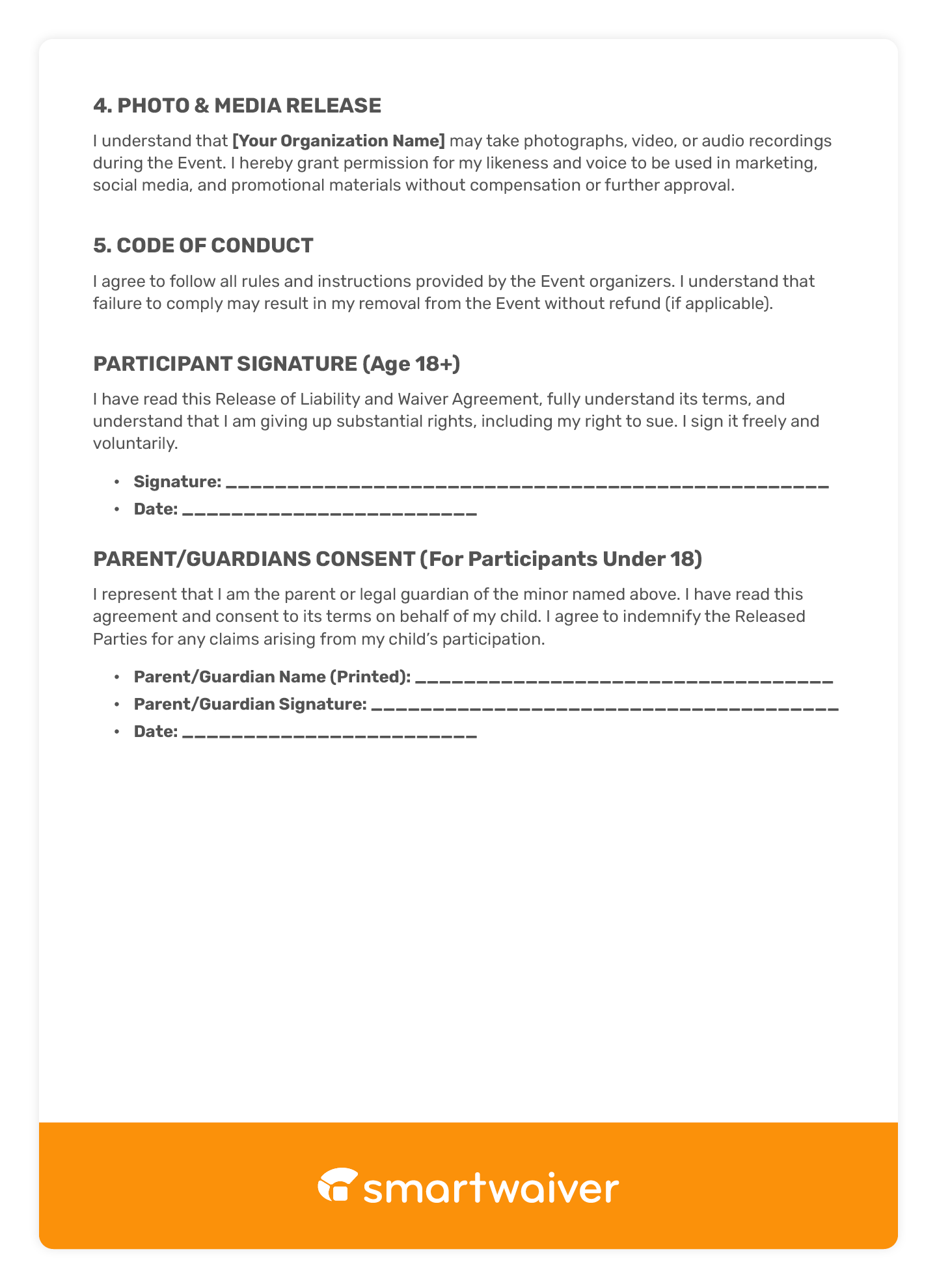
The simple answer here is yes—but as with any legal matter, there are caveats.
In many states, courts will enforce a properly drafted waiver that protects against ordinary negligence. This type of negligence is a simple mistake or lapse in judgment that results in unintentional harm or injury. For example, spilling ice or liquid and neglecting to clean it up, resulting in a runner slipping and getting injured, would fall under this category.
However, waivers are almost never enforceable if the injury was caused by gross negligence, which is a severe, reckless disregard for participants’ safety (e.g., starting the race knowing that there is a risk of lightning strikes in the area). The waiver must also be unambiguous and easy to read—hidden clauses or confusing jargon could render a waiver void in court. This is why it’s always best to get help from a legal professional.